Loading…

Loading…
Artificial intelligence is moving beyond simple question-and-answer tools. In 2026, businesses are increasingly looking at AI systems that can research information, work with software, interact with computers, and handle complex multi-step tasks. GPT-6 Astra is designed for exactly this type of work. OpenAI describes Astra as a model with advanced capabilities in computer use, browsing, software engineering, cybersecurity, research, and professional workflows. It can also create documents, spreadsheets, and presentations while adapting when requirements change. For IT teams, this creates new opportunities to improve troubleshooting, documentation, research, automation, and day-to-day support. However, the most practical approach is to use Astra as a tool that supports IT professionals rather than replacing them.
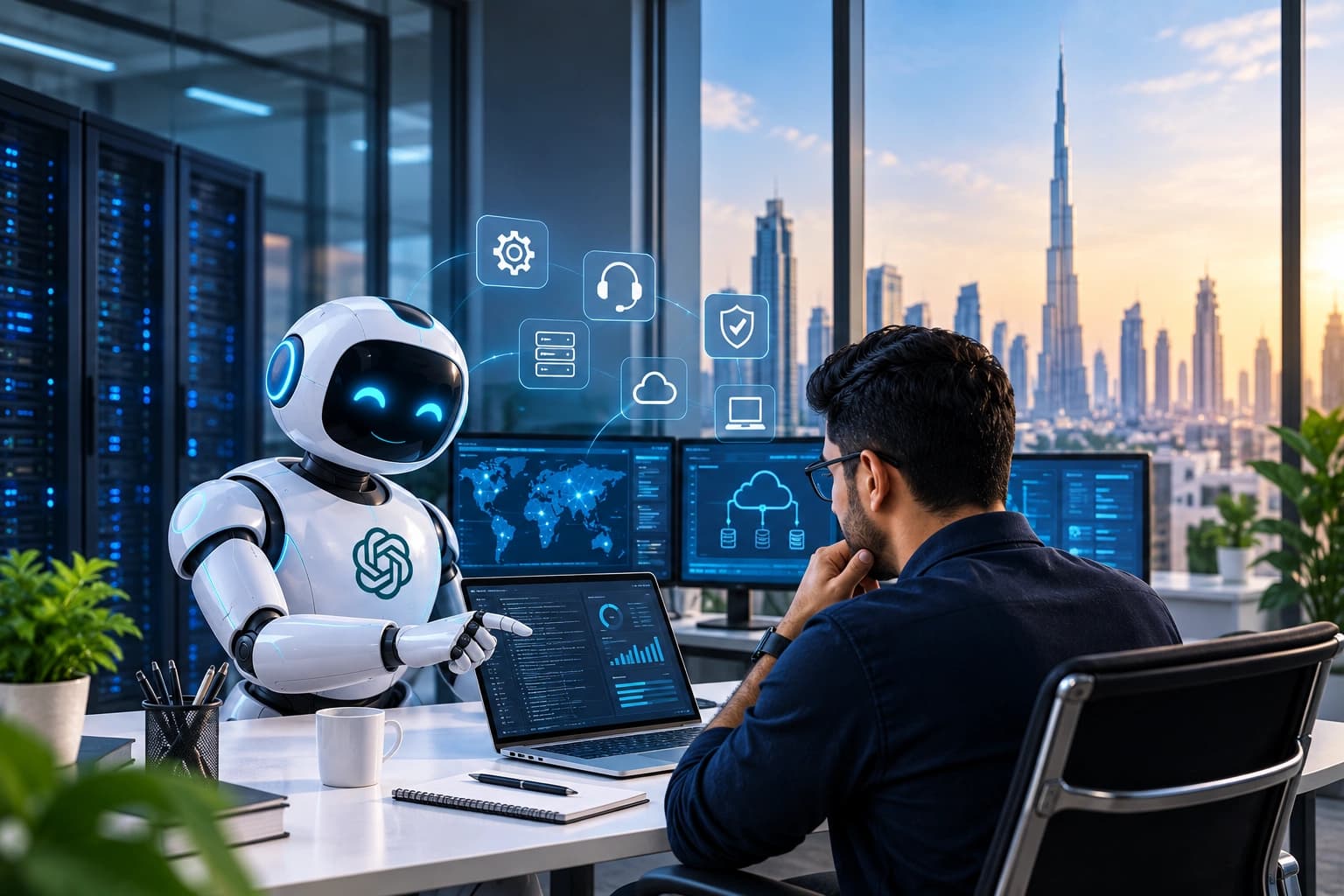
ChatGPT Astra, officially GPT-6 Astra, is OpenAI's latest model designed for demanding professional and multi-step work. Unlike a conventional chatbot that mainly provides answers, Astra can work with computers, browse information, assist with software engineering, and complete tasks using available tools and permissions.
This is particularly relevant to IT because technical support often involves several connected tasks. A technician may need to understand an error, research possible causes, review documentation, analyse information, and determine the safest solution.
AI can assist with many of these activities while the IT professional remains responsible for the final decision.
IT professionals spend time on both complex technical problems and repetitive tasks. AI can help reduce the time required for some of these activities.
Depending on the tools and permissions available, Astra can assist with:
Technical research
Error analysis
Documentation
Troubleshooting workflows
Report preparation
Software-related tasks
Information gathering
Repetitive computer-based work
OpenAI specifically highlights Astra's ability to handle computer-based workflows such as updating records, conducting research, creating websites, performing quality checks, and troubleshooting problems on screen.
This means IT teams can potentially spend less time on routine work and more time on tasks requiring professional judgement.
Troubleshooting is one of the most important parts of IT support. A single problem can involve several systems, making it difficult to identify the root cause quickly.
Astra can help organise technical information and suggest possible troubleshooting paths. For example, a technician could provide an error message, relevant documentation, or other approved information and ask the AI to identify possible causes.
The technician can then verify those suggestions before making changes.
This creates a practical model of AI IT support where AI accelerates investigation while experienced professionals remain responsible for implementation.
IT teams often spend valuable time on routine activities such as preparing documentation, organising information, researching technical solutions, and completing repetitive computer workflows.
Astra's computer-use capabilities create opportunities to automate or assist with some of these tasks. OpenAI reports that Astra can perform tasks across applications and adapt when requirements change.
Businesses should still be selective about what they automate. Low-risk, repetitive tasks are generally a better starting point than giving AI unrestricted control over critical production systems.
When an employee reports a technical problem, an IT technician needs to gather information before deciding how to resolve it.
AI can help speed up this process by organising information, researching relevant documentation, and suggesting possible next steps.
This can be valuable for support teams handling multiple requests simultaneously. Faster research does not necessarily mean every problem will be solved instantly, but it can reduce the time spent on information gathering.
The result can be a more efficient support workflow where technicians focus their attention on diagnosis, implementation, and communication with users.
Modern businesses rely on networks, servers, cloud platforms, security systems, backup solutions, and connected devices. Managing these environments requires both technical expertise and accurate documentation.
IT Infrastructure Services in UAE are becoming increasingly important as businesses expand their use of cloud services, connected systems, and digital applications.
Astra can assist IT professionals with activities such as technical research, documentation, troubleshooting analysis, and information organisation. However, critical infrastructure changes should remain under appropriate human review and control.
AI can help technicians work faster, but it should not remove accountability from the people responsible for business-critical systems.
The impact of AI is not limited to traditional IT departments. Businesses also use technology across sales, operations, customer service, and marketing.
Digital Marketing Services in UAE can potentially benefit from AI-assisted research, data analysis, content planning, reporting, and repetitive digital workflows.
For example, marketing teams could use AI to organise research or analyse large amounts of campaign information. Human professionals can then use those insights to make strategic decisions about content, advertising, audiences, and campaigns.
This is another example of AI increasing productivity without removing the need for human expertise.
For UAE businesses, technology is becoming an increasingly important part of everyday operations. Companies rely on digital platforms for communication, customer management, finance, collaboration, security, and business processes.
An IT Solutions Company in UAE can help businesses identify where AI can realistically improve their existing technology environment.
Potential use cases include:
IT troubleshooting assistance
Technical research
Documentation
Workflow automation
Software development support
Infrastructure analysis
Employee technology support
Cybersecurity research
The right approach depends on the organisation's systems, data, security requirements, and business goals.
Cybersecurity is an area where AI capabilities can provide significant benefits but also require careful controls.
OpenAI says GPT-6 Astra reaches its Critical cybersecurity capability threshold under its Preparedness Framework. Its capabilities can support defensive security work, but the same capabilities create risks if misused.
For businesses, this means AI adoption should include strong security practices. Organisations should carefully control what information AI can access and what actions it is permitted to perform.
AI can support security professionals with research and analysis, but sensitive security decisions should remain subject to appropriate human oversight.
The more realistic future is human + AI collaboration.
Astra can process information quickly, assist with research, work through complex tasks, and automate certain workflows. However, IT professionals provide business context, practical experience, accountability, and judgement.
Consider a critical server problem. AI may help identify possible causes, but deciding whether to restart a production service, change a configuration, restore a backup, or isolate a system can have significant consequences.
These decisions require people who understand the organisation's infrastructure and business requirements.
Astra should therefore be viewed as a productivity tool for IT teams rather than a complete replacement for them.
Businesses should consider data protection before connecting AI tools to internal systems.
Important questions include:
What information can the AI access?
Which users can operate the system?
What applications can it interact with?
What actions require human approval?
How are AI activities monitored?
What happens if the AI makes an incorrect decision?
Access should be limited according to business requirements, particularly when AI interacts with sensitive information or important systems.
OpenAI has also described additional safety monitoring for Astra to detect situations where an agent may not have correctly interpreted instructions.
Businesses do not need to automate their entire IT environment at once.
A practical approach is to begin with lower-risk activities such as research, documentation, reporting, and internal knowledge support.
Once the organisation understands how the AI performs, it can evaluate whether more advanced workflows are appropriate.
Businesses should consider:
Data security
User permissions
Human approval
System access
Monitoring
Accuracy
Compliance requirements
Business continuity
The objective should be to use AI where it provides measurable value while maintaining appropriate controls.
The biggest change Astra may bring to IT support is not the disappearance of IT professionals. Instead, it may change how those professionals spend their time.
When AI handles some research, documentation, analysis, and repetitive computer work, IT professionals can focus more on infrastructure, cybersecurity, strategic planning, complex troubleshooting, and business needs.
OpenAI's current positioning of Astra reflects this broader shift toward AI systems that can carry complex professional work across tools and applications.
For UAE businesses, this could create a more efficient model of IT support where AI handles suitable tasks while experienced professionals maintain control over important technology decisions.
ChatGPT Astra, officially GPT-6 Astra, is an OpenAI model designed for advanced reasoning, computer use, research, software engineering, cybersecurity, and complex professional workflows.
Astra can assist with certain IT workflows, research, documentation, troubleshooting, and computer-based tasks. The level of automation depends on the tools and permissions provided.
No. Astra can assist IT professionals, but human expertise remains important for infrastructure management, cybersecurity, business decisions, and accountability.
Yes. Businesses can explore AI-assisted IT workflows while considering data security, access controls, privacy, and human oversight.
Security depends on implementation. Businesses should limit access, protect sensitive information, monitor AI-assisted workflows, and establish clear internal policies.
ChatGPT Astra is changing what AI-assisted IT support can look like in 2026. Its capabilities in computer use, research, coding, reasoning, and multi-step professional work create new opportunities for businesses and IT teams.
The strongest approach is not to replace experienced IT professionals with AI, but to give those professionals better tools. Astra can help with research, troubleshooting assistance, documentation, automation, and other repetitive activities while people remain responsible for critical infrastructure, security, and business decisions.
For UAE businesses, this combination of AI capabilities and professional IT expertise can create a more productive, responsive, and future-ready technology environment.
Looking to strengthen your business technology? Al Katef IT Solutions provides IT infrastructure, IT support, server and backup, office automation, cybersecurity, and other technology solutions for businesses across the UAE.
Talk to our team about how we can help your business implement the strategies discussed in this article.